
It feels like just yesterday we were laughing at the clumsy attempts of early chatbots to understand a simple pizza order. But here we are, staring down the barrel of 2026, and the landscape has shifted beneath our feet faster than any of us anticipated. If you’ve been feeling a low-level hum of anxiety about where your career stands in the age of automation, you are not alone. I’ve had countless late-night conversations with friends in tech, design, and even customer service who are asking the same question: “Is my job next?”
The truth is, the list of Jobs AI Will Replace in 2026 is no longer a hypothetical sci-fi scenario—it is a forecast based on the rapid adoption of agentic AI and autonomous systems we are seeing right now. But before panic sets in, I want you to take a deep breath. This isn’t just a warning; it’s a roadmap. Understan ding the shift is the first step to surviving it.
In this post, we are going to have a heart-to-heart about which roles are most vulnerable, why the “safe” jobs aren’t what they used to be, and most importantly, the exact steps you need to take today to ensure you aren’t just employable, but indispensable.
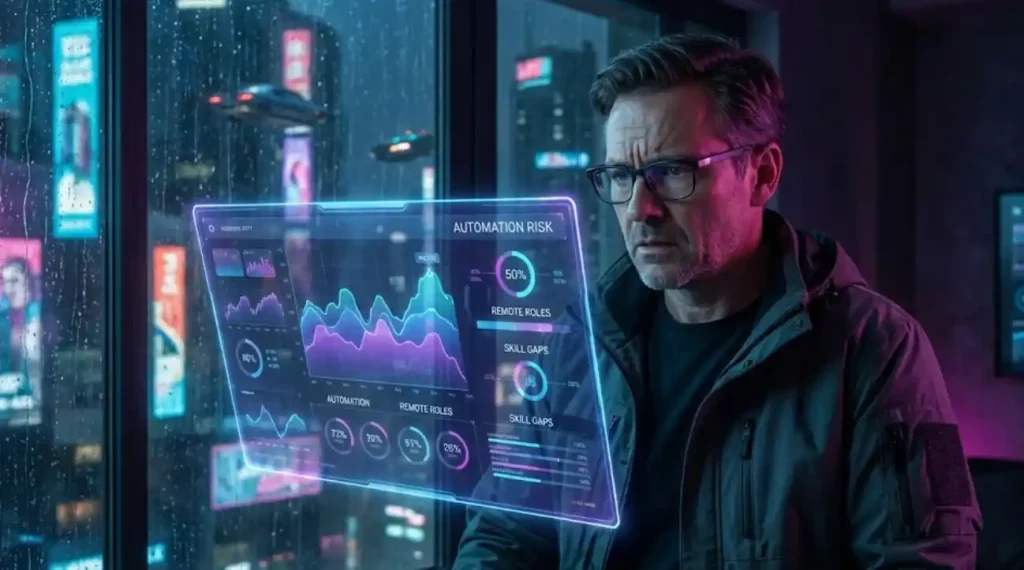
The Shift: Why 2026 is the Tipping Point
Why are we talking about 2026 specifically? It seems like an arbitrary date, but in the tech world, it represents a maturation cycle. The AI tools that were experimental in 2023 and 2024 are hitting enterprise-level reliability by 2026. Companies are moving past the “wow” phase of Generative AI and are now deep into the “efficiency” phase. They aren’t just using AI to assist humans; in many cases, they are redesigning entire workflows to be AI-first.
The focus keyword here isn’t just about “replacement”—it’s about displacement and evolution. The Jobs AI Will Replace in 2026 aren’t disappearing into a black hole; they are being absorbed by software that can work 24/7 without a coffee break.
The Endangered List: Roles Facing the Heat
Let’s rip the band-aid off. Based on current trends and the trajectory of automation, these are the sectors and roles that are facing the most significant threat.
1. Customer Service and Support Representatives
We used to think the “human touch” would save these roles. But have you talked to a high-end AI voice agent recently? By 2026, the Tier 1 support agent—the person who resets your password, tracks your order, or answers basic FAQ questions—will be largely obsolete.
Companies are deploying hyper-realistic voice and chat agents that can handle empathy, tone, and complex troubleshooting better than a tired human at the end of an 8-hour shift. If your daily tasks involve following a script, that script is being fed into a Large Language Model (LLM) as we speak.
2. Data Entry and Administrative Clerks
This one hurts because it has been a reliable entry point into the corporate world for decades. However, the sheer ability of AI to “read” documents, extract data from messy PDFs, and populate spreadsheets means the role of the dedicated Data Entry Clerk is vanishing.
It’s not just about typing fast anymore. Automated systems can now cross-reference invoices, schedule meetings based on email context, and even book travel arrangements without a single human click. The “gatekeeper” roles in administration are being bypassed by smart calendars and auto-executing agents.
3. Junior Coders and Software Testers
This might be the most controversial on the list. For years, “learn to code” was the golden ticket. But the reality of 2026 is that AI is writing the boilerplate code. GitHub Copilot and its successors aren’t just suggesting lines; they are writing entire functions and debugging them.
The entry-level developer who spends their day fixing syntax errors or writing basic CRUD (Create, Read, Update, Delete) applications is finding their seat hotter than ever. The demand is shifting rapidly from “writing code” to “architecting systems” and “auditing AI code.” If you are a junior dev, you need to become a senior architect, fast.

4. Content Writers and Copywriters (The Generic Tier)
As someone who writes for a living, this one hits close to home. The market for generic, SEO-filler content has collapsed. If a job involves writing “5 Tips for Cleaning Your Gutter” or basic product descriptions, AI can do it in seconds, for free.
The Jobs AI Will Replace in 2026 heavily feature the “content mill” writer. Agencies that used to hire armies of writers to churn out 500-word blog posts are switching to one editor managing five AI tools. The “voice” is getting better, and the distinction between a mediocre human writer and a good AI is blurring to the point of invisibility.
5. Translators and Interpreters
We love the idea of connecting cultures, but real-time translation earbuds and software are becoming frighteningly accurate. For technical manuals, business documents, and even live conferences, the need for human translators is shrinking. While high-level literature and diplomatic nuance will still need humans, the bulk of commercial translation work is moving to AI, with humans only acting as final proofreaders.
6. Financial Analysts and Bookkeepers
Money loves logic, and AI is pure logic. The lower tiers of finance—bookkeeping, tax preparation, and basic financial analysis—are being automated. AI can spot trends in market data, categorize expenses, and reconcile accounts faster than any human team. The role is shifting from “calculating the numbers” to “interpreting what the numbers mean for business strategy.”
The “Safe” Zones: What AI Can’t Touch (Yet)
It’s not all doom and gloom. There are moats you can build around your career. The Jobs AI Will Replace in 2026 struggle with a few key human traits:
- Complex Physical Dexterity: Plumbers, electricians, and skilled tradespeople are incredibly safe. Robots are terrible at navigating the chaotic environment of a flooded basement.
- High-Level Strategy & Leadership: AI can give you data, but it can’t convince a board of directors to take a risk or navigate complex office politics.
- True Empathy & Therapy: While AI therapists exist, the human need for genuine connection ensures that roles in mental health, nursing, and caregiving remain resilient.
- Creative Direction: AI can generate an image, but it needs a human with taste and vision to tell it what to generate and how it fits into a broader brand story.
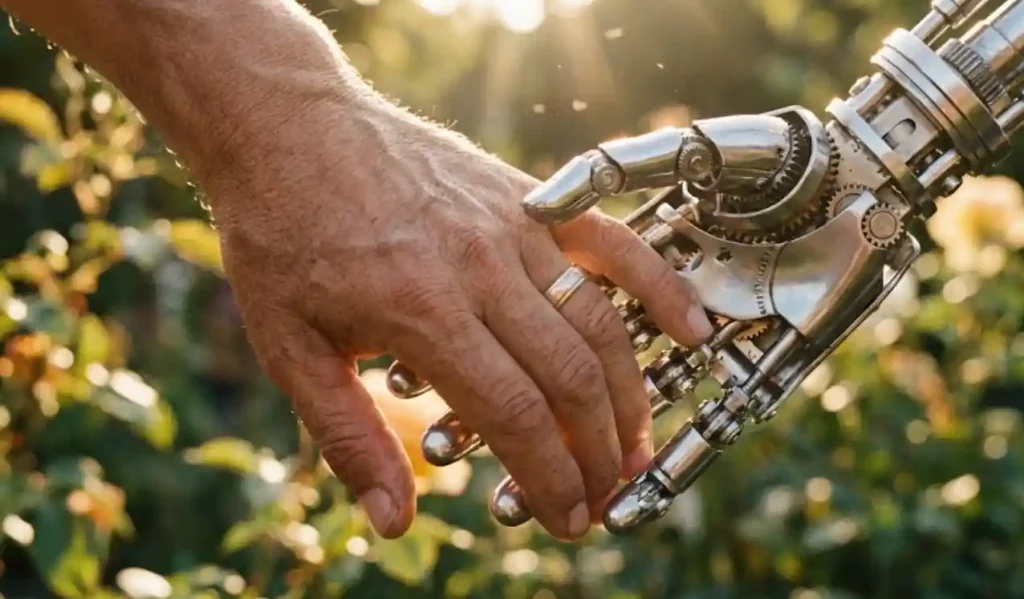
What You Shall Start Doing: Your Survival Guide
So, the scary part is over. Now, let’s talk about action. You can’t stop the wave, but you can learn to surf. If you suspect your role is on the endangered list, here is your game plan for the next 12 months.
1. Become the “Human in the Loop”
Don’t fight the tools; master them. If you are a copywriter, become an expert in prompt engineering and AI editing. If you are a coder, become an expert in reviewing and securing AI-generated code. The most valuable employees in 2026 will be the ones who can manage the AI workforce. Position yourself as the pilot, not the engine.
2. Double Down on “Soft Skills”
I hate the term “soft skills” because it makes them sound optional. They are actually “power skills.” Negotiation, conflict resolution, emotional intelligence, and storytelling are things AI is still clumsy at. In a world where technical execution is cheap, your ability to handle people becomes your premium asset.
3. Build a Personal Brand
This sounds cliché, but it’s vital. People trust people. In an era of AI-generated noise, a trusted human voice stands out. Whether it’s on LinkedIn, a personal blog, or within your industry network, make sure people know you for your unique insights and personality. An algorithm can’t replicate your reputation.
For more insights on how technology is shifting the landscape, check out our extensive coverage on TRICK47.COM – Tech News. We dive deep into these trends daily.
4. Learn to Ask Better Questions
In the past, value was created by finding answers. In the AI age, value is created by asking the right questions. Critical thinking—the ability to look at an AI’s output and say, “That doesn’t look right,” or “What if we approached this differently?”—is a skill that will protect your paycheck.
5. Pivot to “Blue Collar” Tech
There is a massive booming sector in the physical installation and maintenance of this tech. Server technicians, renewable energy installers, and robotics maintenance crews are in high demand. These jobs require a mix of technical knowledge and physical problem-solving that AI simply cannot replicate in 2026.

Conclusion: The Human Edge
The narrative of Jobs AI Will Replace in 2026 is often framed as a horror story, but I prefer to see it as a wake-up call. We have been coasting on repetitive tasks for too long. This shift is forcing us to reconnect with what makes us truly human: our creativity, our empathy, and our ability to dream up things that don’t exist yet.
The machines are coming for the tasks, not necessarily the people—if the people are willing to evolve. You have time. 2026 is approaching, but the future isn’t written in code; it’s written by the people who decide how to use it.
Start learning. Start adapting. And remember, the most sophisticated computer on the planet is still sitting right between your ears. Use it.
For further reading on the global economic impact of these shifts, you can read more at the World Economic Forum.

