
Remember back in 2023 or 2024 when every time you wanted to use an AI assistant, you’d see that little loading spinner? You’d ask a simple question, and your data would take a round-trip to a massive server farm in Oregon or Finland just to tell you how to boil an egg or summarize a PDF. Well, welcome to January 2026. If you’ve kept up with the latest IT and Tech news, you know that the “spinner” is dying.
We are officially living in the era of On-device AI. Thanks to the explosive rise of the Small Language Model (SLM), the “brains” of the operation have moved out of the clouds and directly into our pockets and onto our laps.
Let’s be real: as much as we loved the magic of early LLMs, the privacy concerns were a nightmare. Every prompt was a data point for a mega-corporation. But today, with chips like the Intel Panther Lake and the Snapdragon X2 Elite, your device doesn’t need to “call home” anymore. It’s faster, it’s safer, and honestly, it’s just much cooler.
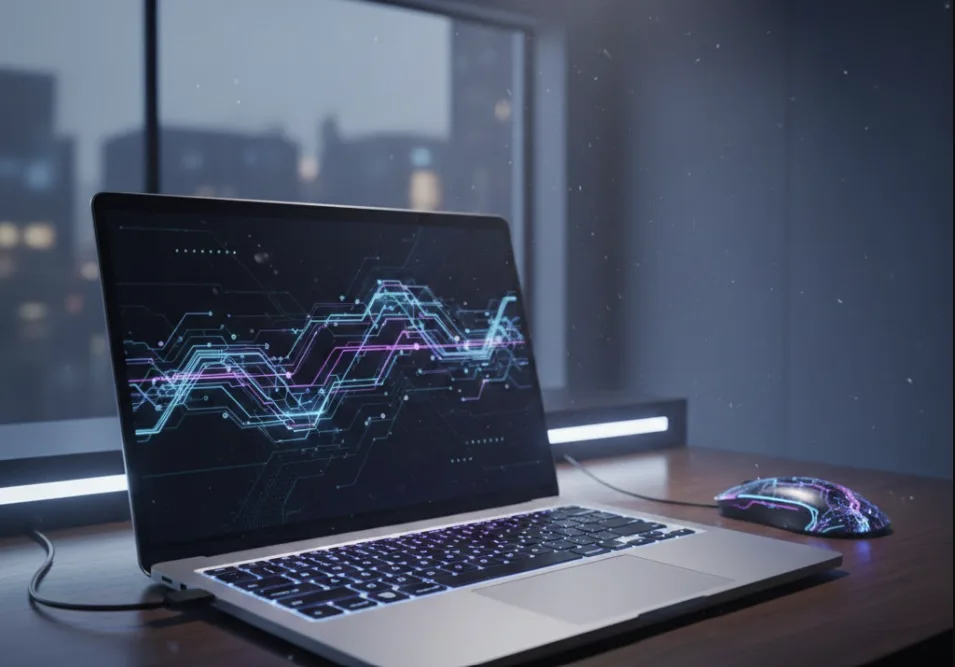
What Exactly is a Small Language Model (SLM)?
For a long time, the tech world was obsessed with “Bigger is Better.” We had models with trillions of parameters that required enough electricity to power a small city. But in 2026, the trend has flipped.
A Small Language Model (SLM) is essentially a highly distilled, hyper-efficient version of those giants. Think of it like this: if GPT-4 was an entire library, an SLM is a specialized expert sitting in your device. It might only have 3 billion to 7 billion parameters, but because it’s optimized for specific tasks—like writing code, editing photos, or managing your schedule—it performs just as well as the giants, but at a fraction of the “cost.”
The beauty of the Small Language Model (SLM) is that it can fit into the RAM of a standard smartphone. This means the AI doesn’t need to be 175 billion parameters large to understand your “human” nuances. It’s lean, it’s mean, and it’s local.
The Hardware Heroes: Panther Lake and Snapdragon X2 Elite
We couldn’t talk about On-device AI without mentioning the silicon that made it possible. This month, Intel officially changed the game with the “Panther Lake” Core Ultra Series 3. These chips aren’t just faster CPUs; they are essentially NPU (Neural Processing Unit) monsters.
For the average user, this means your laptop can now generate high-quality images or transcribe a three-hour meeting in real-time without even connecting to Wi-Fi. It’s all happening on the silicon. Similarly, Qualcomm’s Snapdragon X2 Elite has turned the mobile world upside down. We’re seeing phones that can translate complex live conversations with zero latency because the Small Language Model (SLM) is running right on the chip.
According to a deep dive by The Verge on 2026 hardware trends, the NPU is now the most important spec in a computer—surpassing even raw clock speed or core count.
Why Privacy is the Biggest Winner
Let’s talk about the elephant in the room: Privacy. For the last few years, using AI meant trading your data for convenience. If you were a lawyer, a doctor, or a developer working on proprietary code, using cloud-based AI was a massive risk.
With On-device AI, that risk evaporates. Your prompts stay on your SSD. Your personal photos aren’t being scanned by a server to “improve the model.” When you use a Small Language Model (SLM) locally, the data stays in your “digital house.” This shift is probably the most significant win for digital rights we’ve seen in a decade.

The “No-Internet” Advantage
We’ve all been there—stuck on a plane, in a remote cabin, or just in a dead zone, and suddenly your “smart” assistant becomes as dumb as a brick.
In 2026, On-device AI has fixed this. Because the Small Language Model (SLM) lives on your device, you have full AI capabilities in airplane mode. You can ask your device to reorganize your spreadsheet, generate a bedtime story for your kids, or debug a script while you’re literally miles away from the nearest cell tower. It makes the technology feel like a tool you own rather than a service you rent.
How SLMs are Changing User Experience (UX)
It’s not just about the “math” under the hood; it’s about how it feels. On-device AI is making our tech feel more… human.
- Zero Latency: There is no “thinking” time. The moment you finish typing or speaking, the AI responds. This makes voice assistants finally feel like you’re talking to a person rather than a slow walkie-talkie.
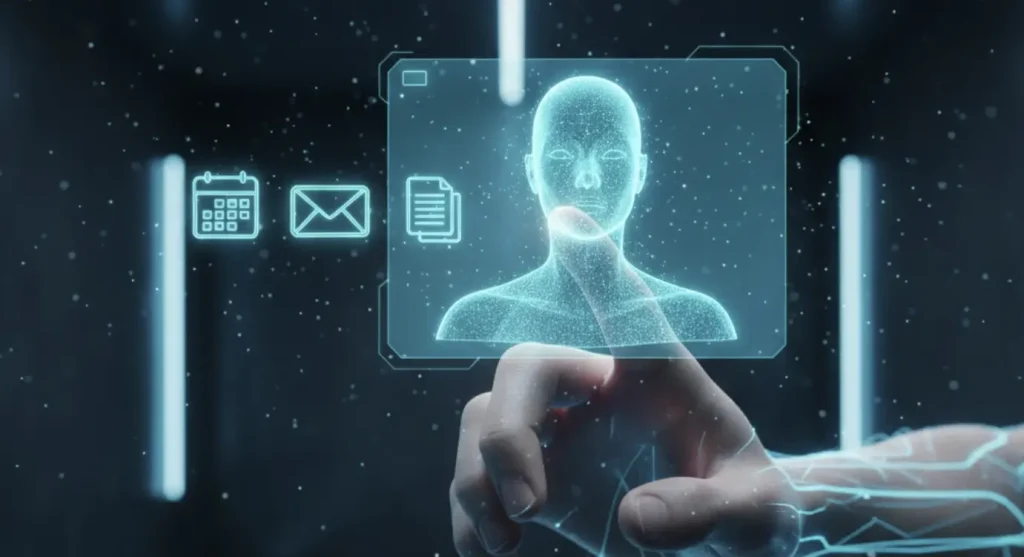
- Context Awareness: Because the AI lives on your device, it can securely “see” your calendar, your files, and your habits (without sending them to a server). It knows that when you say “Send that file to Bob,” you mean the Bob you emailed ten minutes ago, not the Bob from high school.
- Battery Efficiency: Counter-intuitively, running a Small Language Model (SLM) locally can sometimes save battery compared to keeping a high-bandwidth 5G connection open for constant cloud communication.
The Shift in the Developer Ecosystem
Developers are the ones really feeling the heat. In 2024, if you wanted to build an AI app, you had to pay OpenAI or Google for API credits. It was expensive and hard to scale.
Now, developers are building “Local First” apps. They are bundling a Small Language Model (SLM) directly into their software. Whether it’s a photo editor like Adobe’s latest suite or a simple note-taking app, the AI is a feature of the software itself, not a separate subscription-based cloud service. This is democratizing AI development in a way we didn’t think was possible two years ago.
The Challenges: Can SLMs Really Compete?
Now, I don’t want to sound like a total fanboy. There are still limits. If you want to simulate the molecular structure of a new drug or write a 500-page novel in the style of Shakespeare with perfect historical accuracy, you might still need the “Big Iron” in the cloud.
The “Large” in Large Language Models still serves a purpose for ultra-complex reasoning. However, for 95% of what we do every day—emailing, coding, summarizing, and creating—the Small Language Model (SLM) is more than enough. The challenge for 2026 is finding that perfect balance: when to stay local and when to “burst” to the cloud for extra power.

What’s Next for TRICK47 Readers?
If you’re looking to upgrade your tech this year, my advice is simple: Check the NPU. Don’t just look at how much RAM you have; look at how many TOPS (Tera Operations Per Second) your NPU can handle.
The transition to On-device AI is the biggest shift in computing since we moved from desktop software to the web. But this time, we’re moving back—bringing the power of the web back into the palm of our hands.
As we continue to cover the latest IT and Tech news, we’ll be keeping a close eye on which manufacturers are truly prioritizing the “Local First” movement and which ones are still trying to tether you to a subscription-based cloud.
Final Thoughts: A More Personal Tech Future
2026 feels like the year we finally got our digital lives back. By moving toward On-device AI and embracing the Small Language Model (SLM), we aren’t just getting faster gadgets; we’re getting our privacy back. We’re getting reliability back. And most importantly, we’re making AI a personal tool again, rather than a corporate surveillance engine.
It’s an exciting time to be a tech enthusiast. Your next phone or laptop isn’t just a screen; it’s a private, powerful, local brain that works for you and nobody else.
Stay tuned to TRICK47.COM for more updates as this “Local AI” war heats up. The cloud isn’t dead yet, but it’s definitely feeling the thunder from the devices in our pockets.

